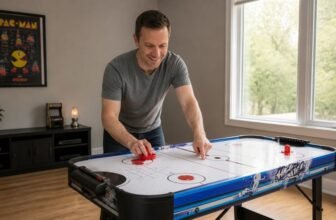
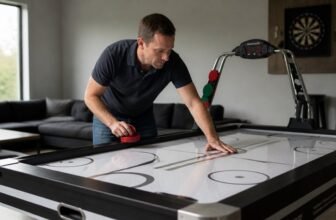
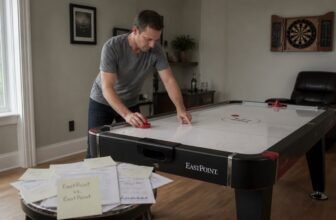
Multi-game tables provide versatile game room entertainment without requiring the dedicated floor space of two full-sized cabinets. When selecting a 2-in-1 combination table that pairs air hockey with table tennis, the primary engineering challenge centers on conversion mechanism rigidity and airflow integrity.
Top Factors in 2-in-1 Combo Table Engineering
Unlike standalone air hockey tables where the playfield is permanently mounted, convertible designs utilize either a rotating swivel bed or an engineered overlay conversion top. The highest-performing models incorporate heavy-gauge steel locking pins that prevent rotational drift during rapid puck volleys. Furthermore, the conversion top must maintain structural flatness to avoid ball deflection during ping-pong play.

Switch between hockey and ping pong instantly—one compact game room center for endless play.

Official replacement pucks keep gliding smooth and fast after your original set wears out.

Ergonomic paddles improve control and spin for better rallies and quicker reaction time.
Check discounted items inMulti-Game Tables
Blower Motor Performance and Surface Airflow
Many multi-game systems compromise on blower output to save weight. In our testing protocols, high-output 110V blowers delivering at least 80 to 100 CFM are necessary to sustain true frictionless hover for regulation pucks. Without sufficient plenum pressure, heavier pucks drag across micro-perforations, significantly reducing volley speed.
Before finalizing your purchase, make sure you account for how much space is needed for an air hockey table. In our laboratory evaluations, table durability across price tiers is determined by plenum blower CFM output and cabinet MDF density.
For ongoing performance and zero dead spots, regular upkeep is simple: frequent surface vacuuming and how to clean an air hockey table surface. Before applying any household waxes, consult our test results of how to make an air hockey table faster to keep your playing surface tournament fast.
Room Sizing and Clearance Requirements
While combo tables save overall storage space, players require adequate perimeter clearance. For a standard 7-foot combination table, allow a minimum perimeter clearance of 4 feet on all sides to accommodate full table tennis paddle swing arcs and lateral air hockey defense stances.