The Origins, Science & Official Rules of Air Hockey
Air hockey is a high-speed collision of pneumatic engineering and rapid hand-eye reflexes. Conceived in 1969 by Brunswick Corporation engineers exploring frictionless levitation, refined by Bob Lemieux in 1972, and governed by the USAA since 1975, competitive air hockey combines calibrated plenum airflow, precision polycarbonate pucks, and strict tournament regulations where shots regularly exceed 80 mph.
Founders & U.S. Patent 3,773,325
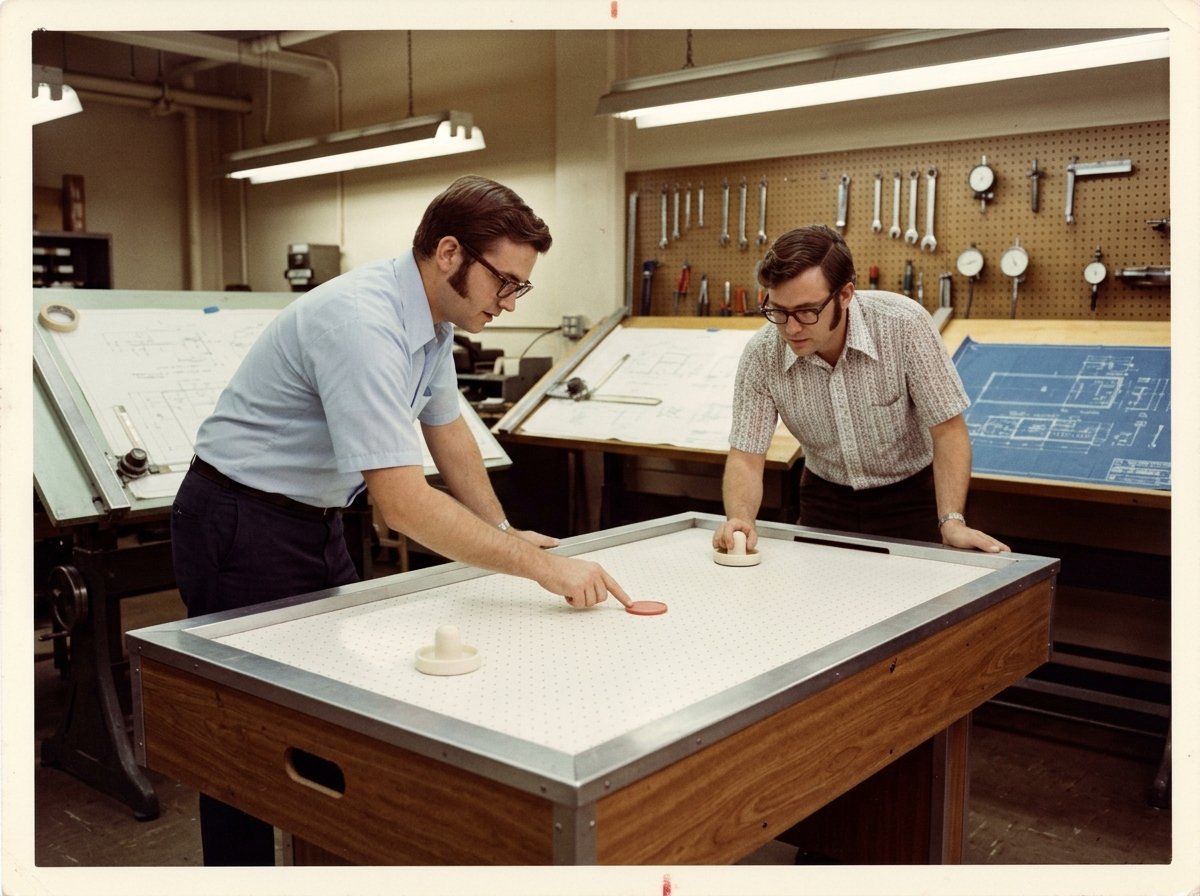
Between 1969 and 1971, Brunswick Billiards engineers Bob Kendrick, Brad Baldwin, and Philip Crossman built the first low-friction air table. Engineer Bob Lemieux revived the dormant prototype in 1972, designing the disc puck, sombrero mallets, and slotted goals. Brunswick patented the invention under U.S. Patent 3,773,325 (“Air Cushion Table Game”) and 3,927,885.
Early Tables & Arcade Boom (1972 to 1975)
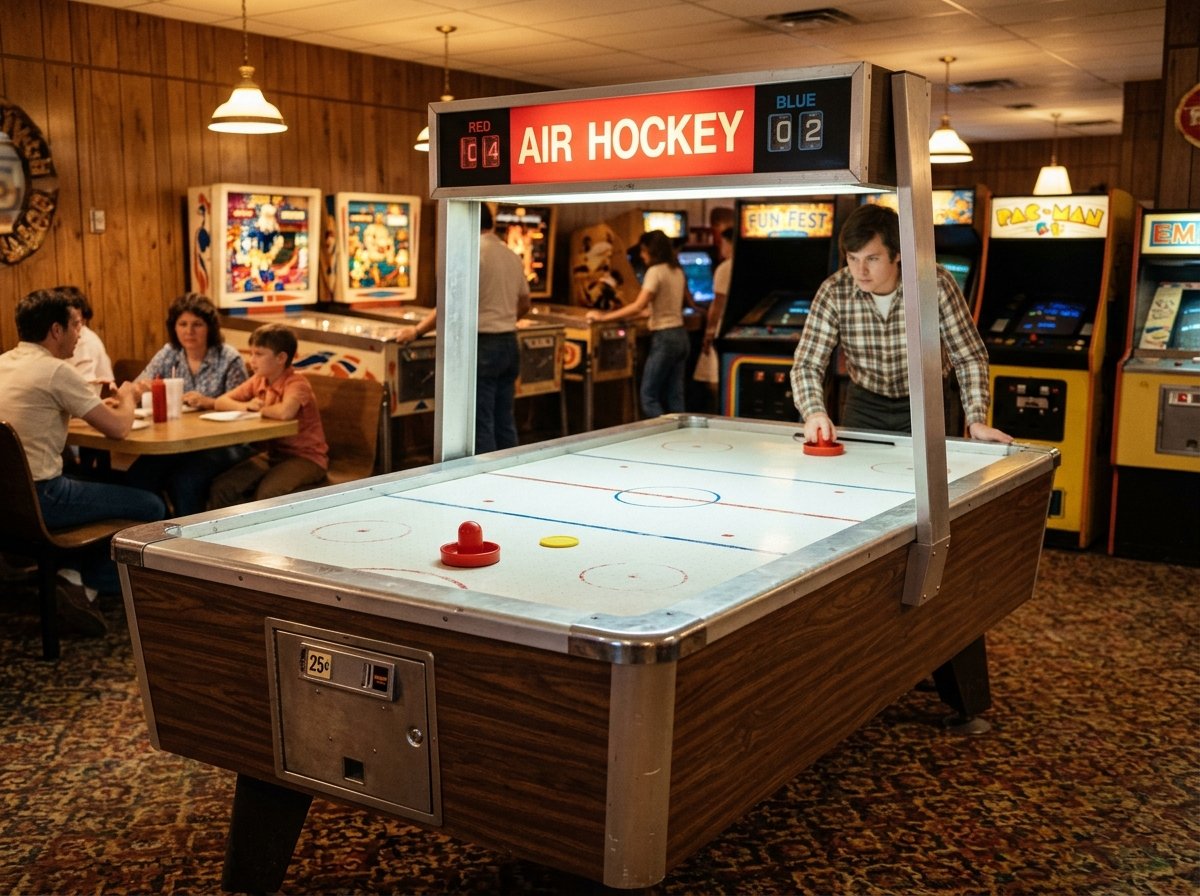
Brunswick launched the first commercial coin-op tables in 1972 featuring rich woodgrain laminate cabinets, electronic scoring drop chutes, and high-impact rails. In 1975, J. Phillip Arnold founded the United States Air-Table Hockey Association (USAA), establishing standardized rules and national championships that cemented Dynamo 8-foot tables as the tournament benchmark.
Tournament Equipment Anatomy
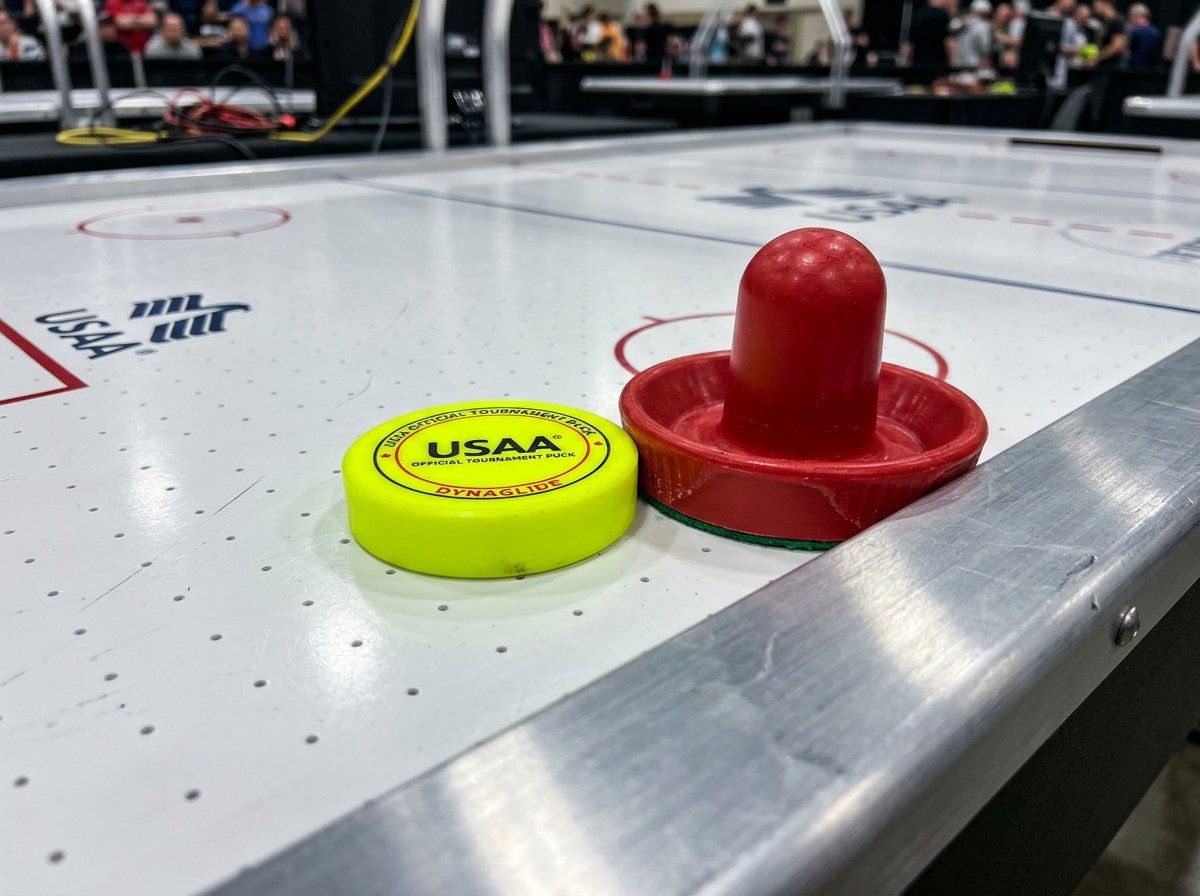
Official competition mandates 8-foot tables powered by commercial high-CFM centrifugal blowers, forcing air through thousands of laser-drilled playfield holes. Sanctioned pucks are precision 3.25-inch Lexan polycarbonate discs, struck by high-impact sombrero mallets fitted with non-abrasive felt padding, banking off solid aluminum rails for true rebounds.
Official Rules of Play
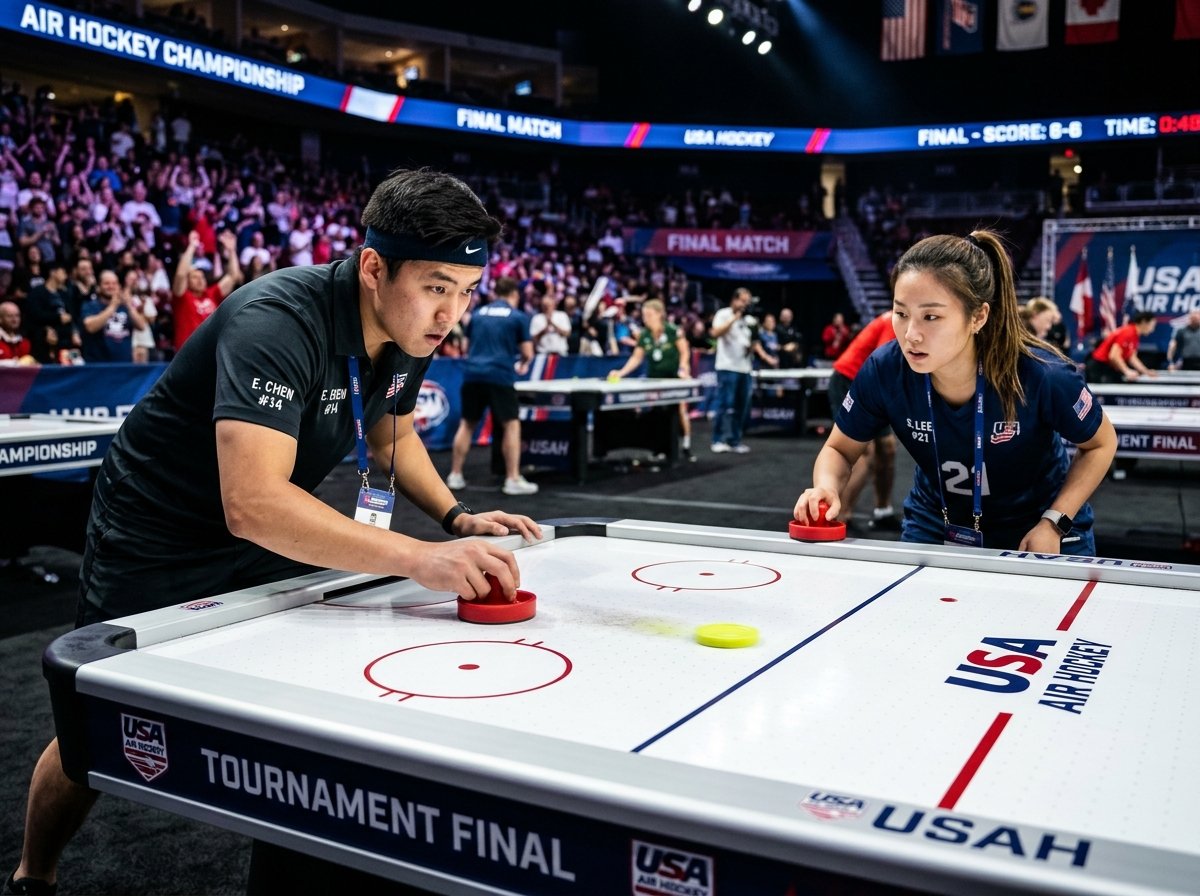
Matches are decided in a race to 7 goals, and pucks must drop completely into the goal pocket to score. Players must release each shot within 7 seconds of crossing into their half, cannot cross the centerline with mallets, and are penalized for palming (touching puck with hands/body) or topping (trapping puck under the mallet flat face).
From compact tabletop units to full-size 8-foot commercial arcade powerhouses, Air Hockey Life benchmarks motor airflow CFM, rail rebound velocity, and playfield flatness so you get genuine arcade-grade performance.
Know how we can help